Skip-the-Line Tickets and Practical Tips to Save Hours at Musée d’Orsay

Charlotte Whitfield
16 June 2026
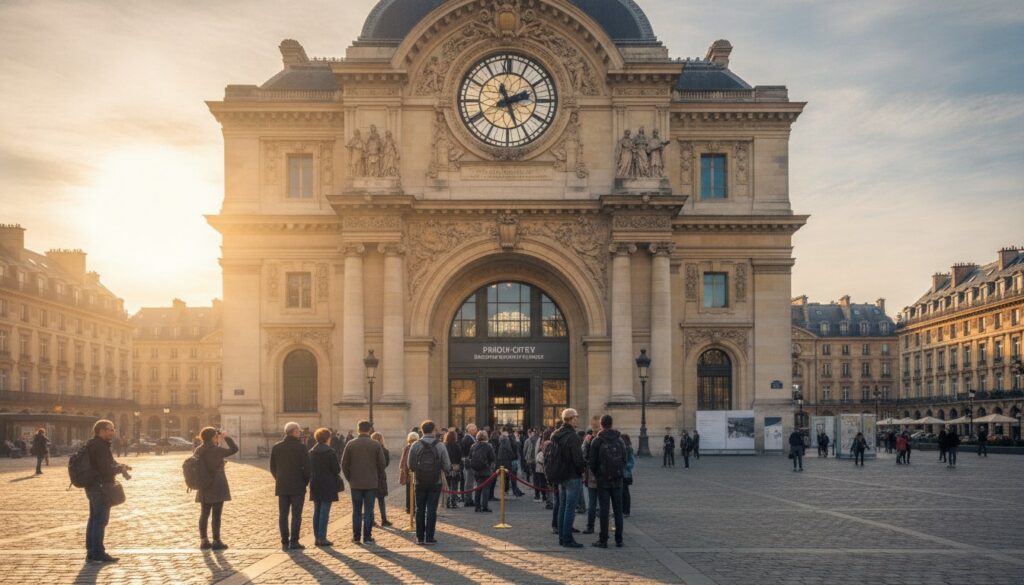
Skip-the-Line Tickets and Practical Tips to Save Hours at Musée d’Orsay
Introduction
Picture this: you’ve just arrived in Paris, croissant in hand, ready to lose yourself in the swirling brushstrokes of Monet, Renoir, and Van Gogh. But as you round the corner toward the Musée d’Orsay, your heart sinks — a serpentine queue stretches along the Seine, and the wait looks like it could swallow your entire morning. Sound familiar?
The Musée d’Orsay is one of the world’s most visited museums, welcoming over 3.5 million visitors per year. Housed in a breathtaking former railway station on the Left Bank, it holds the planet’s largest collection of Impressionist and Post-Impressionist masterpieces. Naturally, everyone wants in — and that means lines can easily exceed 60 to 90 minutes during peak season.
But here’s the good news: with a little planning, you can breeze past those queues and walk straight into the grand nave. In this guide, I’ll share every strategy I know — from securing the right skip-the-line tickets to choosing the perfect time slot, using the lesser-known entrances, and navigating the museum like a seasoned Parisian. Let’s reclaim your vacation time.
Why the Queues at Musée d’Orsay Are So Long
Before diving into solutions, it helps to understand why the lines form in the first place. There are actually two separate queues outside the museum:
- The ticket-purchase line — for visitors who haven’t bought tickets in advance.
- The security screening line — which everyone must pass through, regardless of ticket type.
Pro Tip: The single most impactful thing you can do is eliminate the ticket-purchase line entirely by buying your entry in advance. This alone can save you 30–60 minutes.
Section 1: How to Get Skip-the-Line Tickets
There are several legitimate ways to skip the longest queues at the Musée d’Orsay. Here’s a breakdown of every option, ranked by convenience and value.
1. Timed-Entry Tickets from the Official Website
The museum’s own website (musee-orsay.fr) sells timed-entry tickets that let you choose a specific 30-minute arrival window. This is the most straightforward and affordable option.
- Price: €16 for adults (as of 2024); free for EU residents under 26 and visitors under 18.
- Advantage: You enter through the priority access lane (Entrance C), bypassing the general ticket queue.
- Booking window: Tickets typically open several weeks in advance. Book as early as possible, especially for weekends.
2. Paris Museum Pass
The Paris Museum Pass grants skip-the-line access to over 50 museums and monuments, including the Musée d’Orsay, the Louvre, Versailles, and more.
- Options: 2-day (€55), 4-day (€70), or 6-day (€85) passes.
- Best for: Visitors planning to hit multiple museums during their trip.
- Important caveat: Since 2023, you still need to reserve a time slot on the Musée d’Orsay website even with the Museum Pass. Don’t skip this step or you may be turned away.
3. Guided Tour Packages
Several reputable tour operators offer small-group or private guided tours that include skip-the-line entry. These are ideal if you want expert commentary alongside priority access.
- Typical price: €50–€90 per person, including admission.
- Duration: 1.5 to 2.5 hours.
- Recommended providers: GetYourGuide, Walks, and Context Travel all offer highly rated options.
Why choose a guided tour? A knowledgeable guide can help you navigate the museum’s five floors efficiently, ensuring you see the highlights — Starry Night Over the Rhône, Bal du moulin de la Galette, Olympia — without wandering aimlessly.
4. Combined Tickets
The Musée d’Orsay offers combined tickets with the Musée de l’Orangerie (home to Monet’s famous Water Lilies murals). This combo ticket includes priority access to both museums and saves a few euros compared to buying separately.
- Price: €22 for the combined ticket.
- Validity: Use within 3 months; visit each museum once.
5. ICOM Cards, Press Cards, and Other Special Access
If you hold an ICOM membership card, a valid press card, or a disability card, you’re entitled to free admission and priority entry. Bring your credentials and head directly to Entrance A on the western side of the building.
Section 2: The Best Times to Visit (Secret Low-Traffic Hours)
Even with a skip-the-line ticket, timing matters. The museum experience is dramatically different when you’re sharing a gallery with 20 people versus 200. Here are the insider windows that most tourists overlook.
Early Morning (Tuesday & Wednesday)
The museum opens at 9:30 AM most days. Arriving right at opening on a Tuesday or Wednesday is your golden ticket to a peaceful experience. These are statistically the least-visited weekdays.
- Aim to be at the entrance by 9:15 AM.
- Head straight to the 5th floor (Impressionist galleries) before the crowds arrive — most visitors start on the ground floor and work up.
Thursday Evening Sessions
Every Thursday, the Musée d’Orsay stays open until 9:45 PM. The evening session (after 6:00 PM) is one of the best-kept secrets in Paris.
- Crowds thin dramatically after 6 PM.
- The golden evening light filtering through the museum’s famous clock windows creates an unforgettable atmosphere.
- Pair it with a late dinner at a nearby Left Bank bistro for a perfect Parisian evening.
Avoiding the Worst Times
Here’s what to avoid if possible:
- First Sunday of the month — Free admission means enormous crowds.
- Saturdays — The busiest day of the week, especially between 11 AM and 3 PM.
- Rainy days — Parisians and tourists alike flock to indoor attractions when the weather turns.
- School holidays (French zones A, B, and C) — Check the French school calendar before booking.
Quick Reference — Best to Worst Visiting Times:>
🟢 Thursday evening (6–9 PM) — Excellent
🟢 Tuesday/Wednesday at opening — Very good
🟡 Monday/Friday mornings — Good
🔴 Saturday midday — Avoid
🔴 First Sunday of the month — Avoid
Section 3: Which Entrance to Use
The Musée d’Orsay has multiple entrances, and choosing the right one can shave precious minutes off your wait.
Entrance A (West Side, Rue de la Légion d’Honneur)
This is the main entrance for visitors without advance tickets, groups, and those with special access cards. It’s also where the longest lines form.
Entrance C (East Side, Along the Seine)
This is the priority entrance for holders of:
- Timed-entry e-tickets
- Paris Museum Pass (with reservation)
- Guided tour participants
Always head to Entrance C if you have a pre-purchased ticket. It’s clearly marked, and the line moves quickly since there’s no ticket-purchasing bottleneck.
Entrance D (Accessible Entrance)
Located near Entrance A, this is reserved for visitors with reduced mobility. It provides step-free access and a dedicated security lane.
Section 4: Inside the Museum — Maximizing Your Visit
Once you’re past the entrance, smart navigation makes all the difference. The Musée d’Orsay spans five levels organized roughly by chronological period and artistic movement.
The Reverse Strategy
Most visitors follow the suggested route starting on the ground floor (pre-1870 works, Delacroix, Ingres). This means the upper floors stay relatively empty for the first hour.
My recommendation: Take the escalator directly to the 5th floor to see the Impressionist and Post-Impressionist collections first. This is where you’ll find:
- Monet — Blue Water Lilies, Rouen Cathedral series
- Renoir — Bal du moulin de la Galette, Dance at Bougival
- Van Gogh — Starry Night Over the Rhône, Bedroom in Arles, Self-Portrait
- Degas — The Dance Class, Blue Dancers
- Cézanne — The Card Players, Apples and Oranges
Don’t Miss These Hidden Gems
Beyond the blockbuster Impressionist works, make time for:
- The Ballroom (Salle des Fêtes) — A lavishly decorated room from the original hotel that once occupied the building. Most visitors walk right past it.
- The Clock Windows — Stand behind the giant transparent clock face on the 5th floor for a stunning view of Montmartre and the Sacré-Cœur.
- Art Nouveau Furniture Collection — On the middle level, an often-overlooked display of exquisite decorative arts.
- The Sculpture Terraces — Open-air terraces on the 5th floor with Rodin-era sculptures and panoramic views.
Practical Amenities
- Cloakroom: Free and located near the entrance. Drop your bags and coats — you’ll be more comfortable.
- Audio Guide: Available for €6. Also accessible via the museum’s app (download before you arrive to save time).
- Café Campana: Located on the 5th floor behind the clock, this Art Nouveau café designed by the Campana Brothers is worth a stop for coffee and the view alone.
- Restaurant: The museum’s formal restaurant on the 1st floor features stunning painted ceilings. Reservations recommended for lunch.
Section 5: Additional Money-Saving and Time-Saving Hacks
Here are a few more tips that seasoned visitors swear by:
- Download your tickets to your phone before arriving. The museum accepts mobile tickets, so there’s no need to print anything — and no risk of forgetting paper tickets at the hotel.
- Bring your own water bottle. Café prices inside are steep, and there are water fountains available.
- Wear comfortable shoes. The museum covers a vast area across multiple levels. You’ll walk more than you expect.
- Check for strikes. France is famous for its grèves (strikes). A quick check of local news the morning of your visit can save you from arriving at a closed museum.
- Use the Musée d’Orsay app to create a personalized itinerary before your visit. You can bookmark specific works and the app will generate an optimized route.
- Photography is allowed (without flash) in the permanent collections. Leave the selfie stick at home, though — they’re banned.
Budget Tip: If you’re an EU resident aged 18–25, admission is completely free. You’ll still want to reserve a time slot online to skip the queue.
Conclusion
The Musée d’Orsay is one of those rare places where the building itself is as magnificent as the art it contains. Standing beneath the soaring glass ceiling of the former Gare d’Orsay, surrounded by some of humanity’s most beautiful creations, is an experience that deserves your full attention — not the frustration of a wasted morning in line.
To recap the key strategies:
- Buy timed-entry tickets online well in advance — this is non-negotiable.
- Use Entrance C for priority access.
- Visit on Thursday evenings or Tuesday/Wednesday mornings for the thinnest crowds.
- Start on the 5th floor and work your way down to beat the flow of traffic.
- Download the museum app and plan your must-see works before you arrive.
Ready to Plan Your Visit?
Don’t leave your Musée d’Orsay experience to chance. Book your timed-entry tickets today on the official website, download the museum app, and start building your personalized itinerary. If you found this guide helpful, share it with your travel companions so everyone arrives prepared.
Have you visited the Musée d’Orsay? Drop your own tips and favorite artworks in the comments below — I’d love to hear about your experience!
Happy travels, and enjoy every brushstroke. 🎨